
After 1945: Returning to a Changed World
“The painful journey of the survivors who returned to Vilkaviškis, determined to honor the dead and piece together the fragments of a shattered community.”
Shmarihu Pustapetski – The Bitter Return
"For those who survived the camps or endured the harsh isolation of Siberia, the journey back to Vilkaviškis was filled with a painful anticipation. Shmarihu Pustapetski vividly recorded the harrowing reality of walking back into his hometown. The physical streets remained, and the houses still stood, but the vibrant Jewish life that had defined the culture, commerce, and soul of the town for centuries had been completely erased. Survivors were met with an overwhelming silence, tasked with the impossible burden of processing unimaginable grief while trying to piece together the fragments of their shattered lives."
"We walked through the familiar streets, looking at the windows where our families and neighbors used to wave to us. Now, strangers looked back, and the silence of our loved ones was deafening. We realized then that we had survived, but the world we knew was gone." — From the memories of Shmarihu Pustapetski
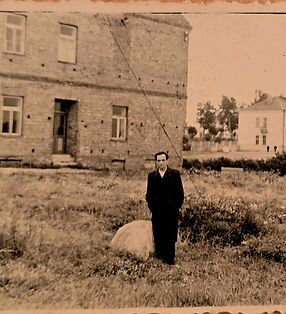


Eli Rutshtein: A Phone Call, A Journey, and the Final Chapter
"In 2009, a surprise telephone call from England bridged the past and the present. It was Eli Rutshtein. For his birthday, his family had gifted him a trip back to his birthplace of Vilkaviškis. Knowing no one left in the town, he reached out for guidance. That single connection set off a historic journey.
Documented by The Jewish Chronicle, Eli’s return to his family home became a symbolic milestone—marking the journey of the 'Last Jew of Vilkaviškis' going home. By preserving the memory of his house and his return, the physical loop of Jewish presence in the town was closed with dignity, ensuring his story remains permanently etched into the district's history."
“He told me he knew no one there today. I said, 'No problem, Eli, leave it to me'—and the rest is history.” — Ralph Salinger, 2009

.jpg)

The First Keepers of Memory: Defiance Against Forgetting
"Long before global foundations, digital archives, or official state ceremonies existed, the initial burden of remembrance fell squarely on the shoulders of the survivors. Returning to the very sites of execution in the immediate post-war years, these resilient individuals used their own hands to erect the town's original Holocaust monuments.
These early, humble markers were profound acts of defiance. Built by those who had survived the unthinkable, they broke the silence of the landscape and ensured that the world would always know exactly where their families lay. They laid the literal and moral foundations for all the preservation work that continues today."

“The early monuments were built not of grand granite, but of pure determination—erected by survivors who refused to let the names of their communities vanish into the soil.”